Monday, 30 March 2015

Malin Head: Hell's Hole

So after our morning touring, I did fall asleep for a bit...  Then we took off in the car and headed straight to Hell er, Hell's Hole....  We drove to Banba's Crown and then got out to walk around.  Banba's Crown is the most northerly point of the mainland of Ireland.  On it sits an old tower built by the British/Lloyd's of London, in 1805 to monitor shipping traffic and to ward off invasion.  The waterway around Malin Head is particularly treacherous and over 400 shipwrecks have been recorded around the peninsula. The Tower at Banba's Crown was the first place in Europe to get news of Abraham Lincoln's assassination and of the start of the California Gold Rush.

If you walk to the tower, you can look down and see white stones spelling "EIRE" and this was done so planes would know they were flying over Ireland, a neutral country in WWII.  Why was Ireland neutral?  Perhaps because they were a relatively new nation?  Perhaps because they viewed any request or pressure coming from Great Britain as suspect?  I don't know.  There are some interesting books about it, including one by Bernard Kelly called Returning Home, which was published in 2012.  It is an interesting  read.

We did not climb the tower.  When we got out there in the afternoon, our gorgeous sunny day was essentially gone and it was WINDY, like, lose your car door windy.  So, we decided just to trek down the path to Hell where we belonged!

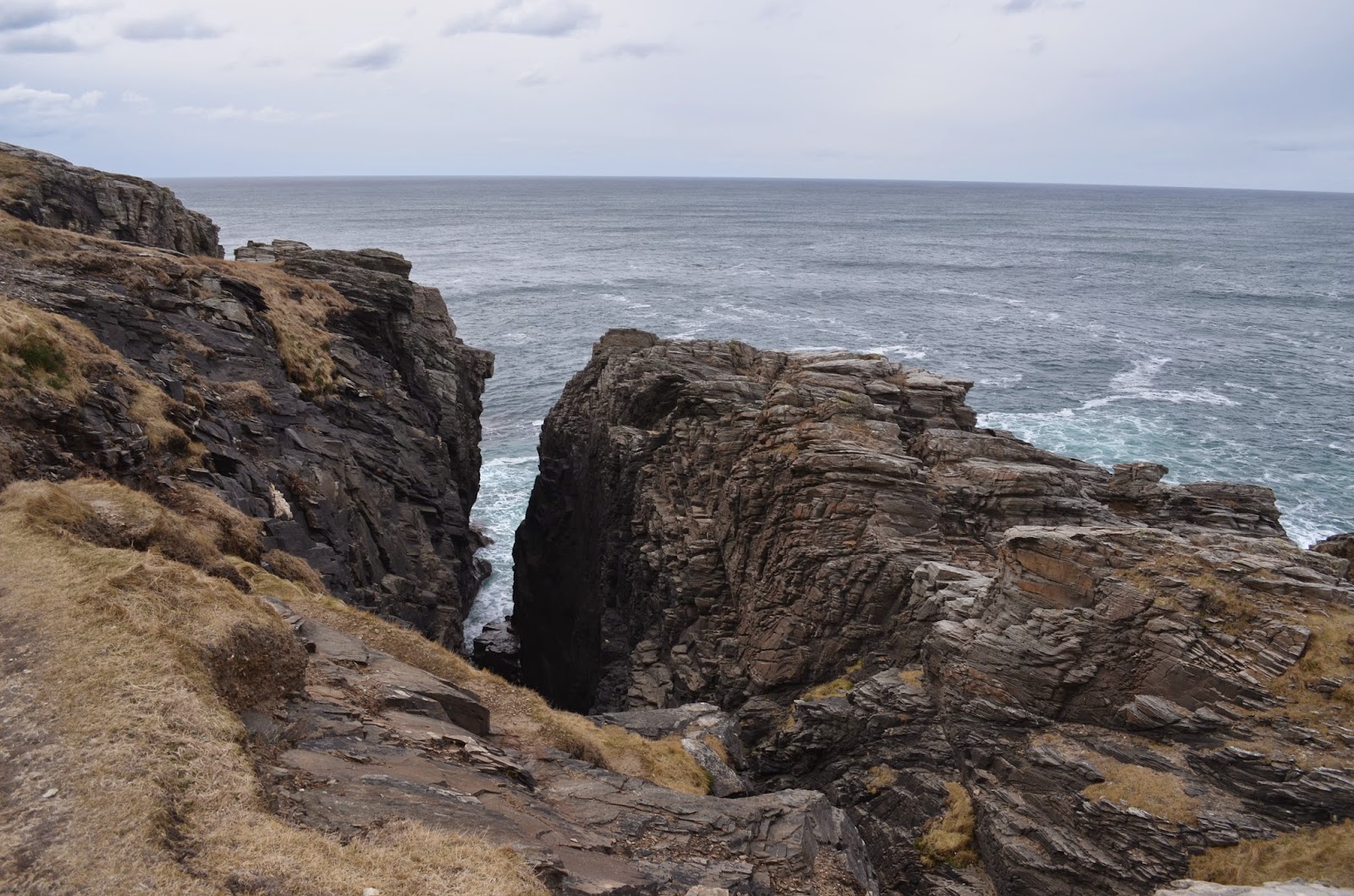
According to information about it, Hell's Hole is a subterranean cavern and gorge that is 250 meters long and 8 meters wide where the sea rushes in through the long, narrow neck into a wide basin where there is a sea cave.  Amy and I sat there for a long time watching the tide come in.  It was amazing and beautiful, and it warmed up a bit.  After all, we were in Hell's Hole....


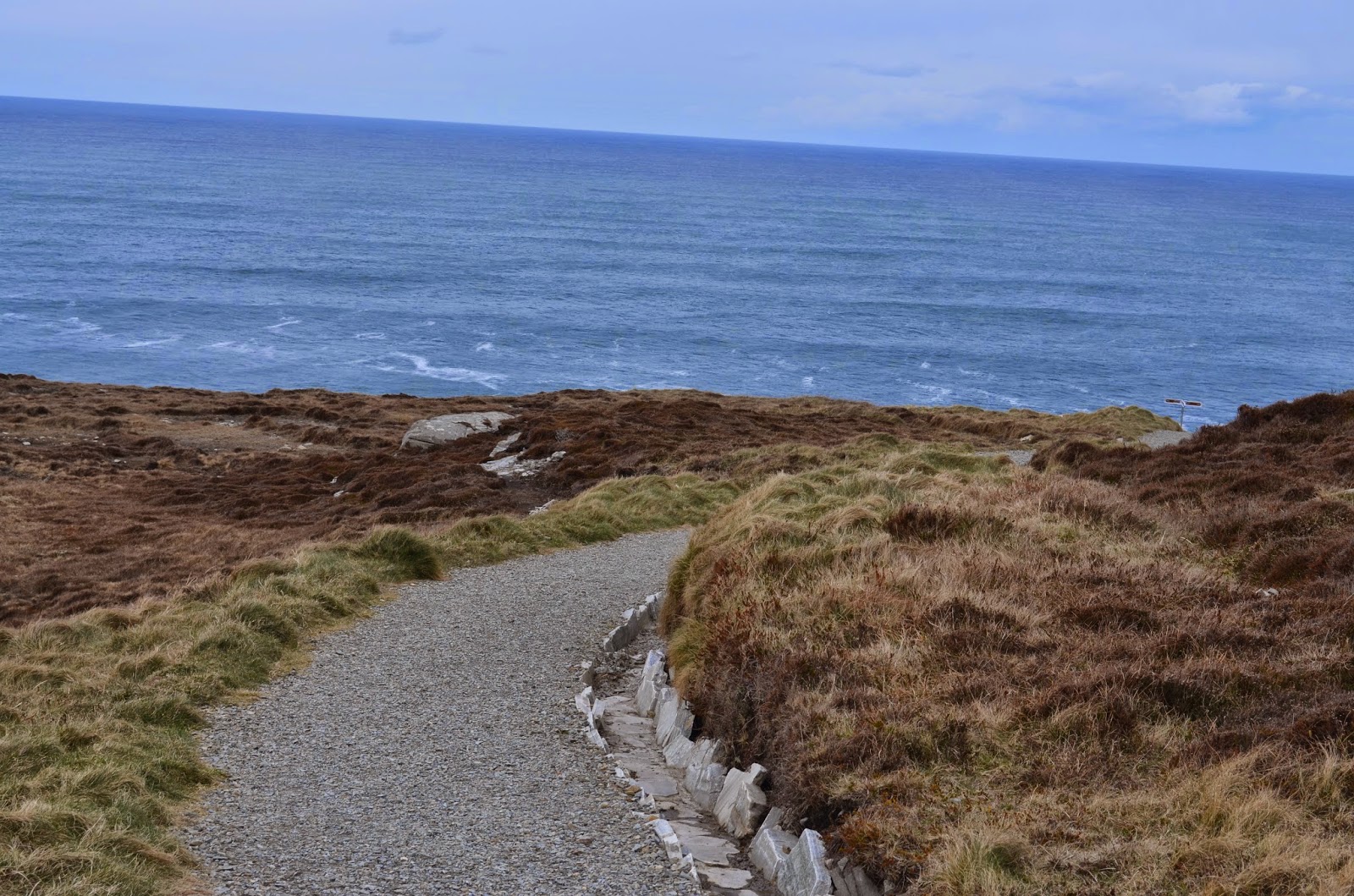
You can see that the blue sky started coming back out for us as we walked the path along the cliffs.


In the Bay we saw a seal, but couldn't capture it on camera...If I zoom in on my picture, I can see a dark shadow in the water that would be the seal.


The next several pictures are the area known as Hell's Hole.


This was where we were watching the tide roll in.  The water was so aqua and lovely, and the waves were just crashing in on the rocks and eventually covering them.  I can see why it is a dangerous area for ships!


Sunday, 29 March 2015

Malin Head: A Few More Gorgeous Shots!

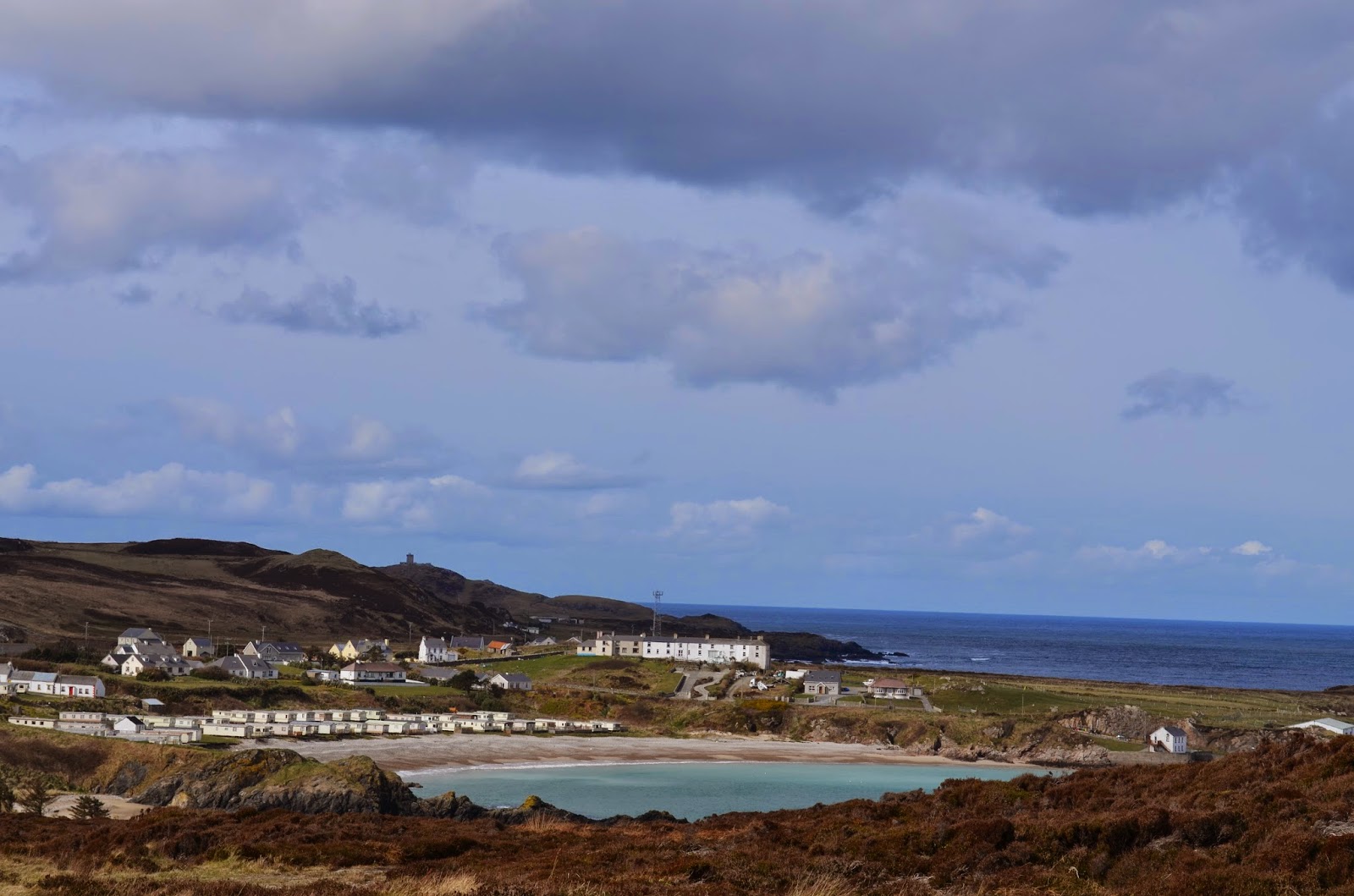
Most of these were taken on our walk back to the B&B.


It is a peninsula - these 2 shots, above and below, show the sea on the other side.


Malin Head: The Wee House, the 15th Century Church and The Saddle Rock

Once you get part way down the hill, the view is amazing!


This is the ruins of the 15th Century Church.


The next five pictures are ones Amy took. You can see I did have to bundle up a bit - polar fleece, windbreaker, and my flannel-lined jeans!


I didn't go to the top of this rock as I didn't want to suffer a holiday accident!


See our rosy cheeks!  It was rather windy...


Below is the rock I climbed up on.  Just halfway though!


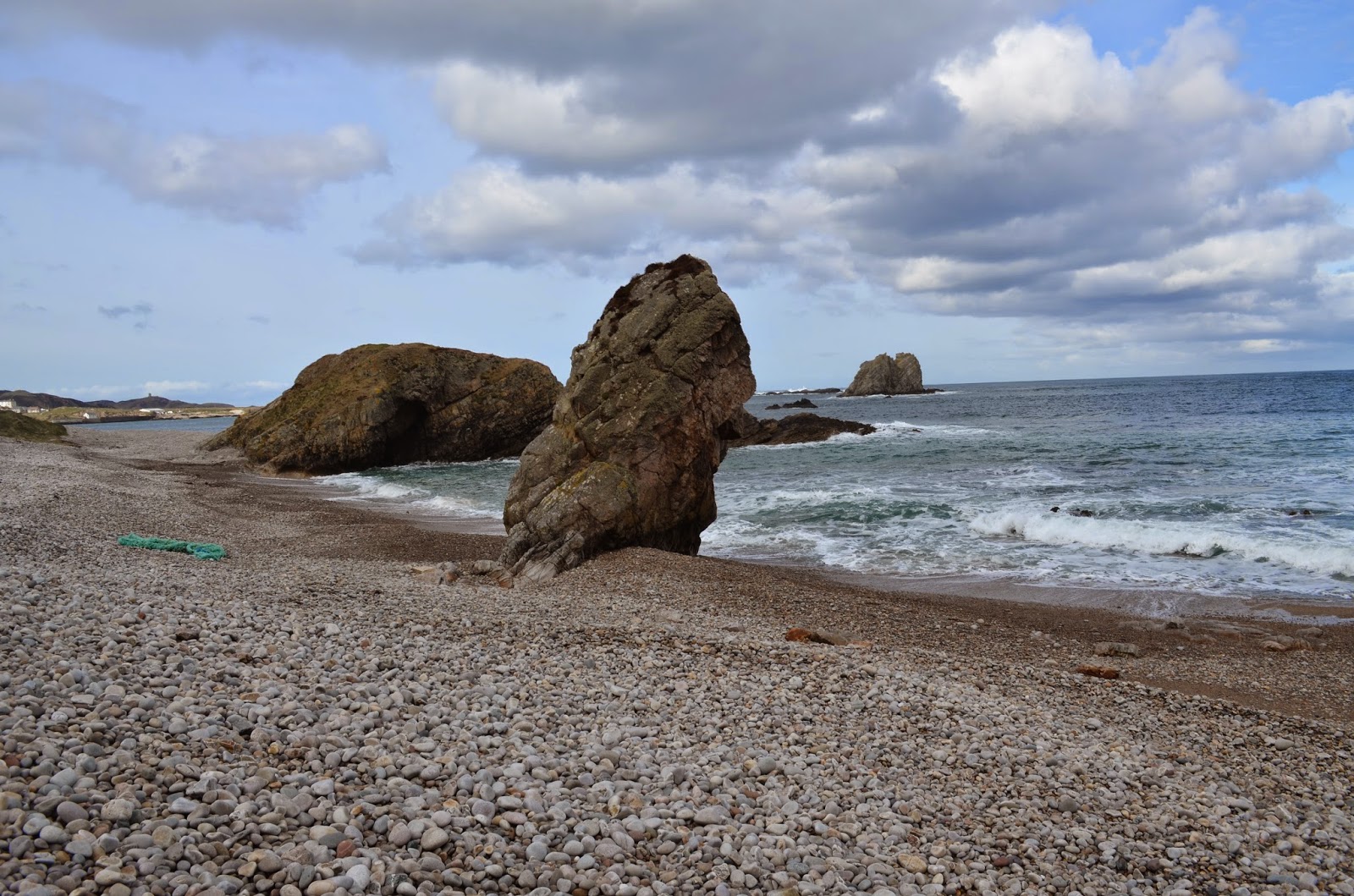
Below is The Saddle Rock.


The Wee House is actually this cave!  Apparently a family actually lived here and legend says St. Muiredach took refuge there.  Who was St. Muiredach?  I don't know.  Apparently he was related to St. Patrick (who wasn't really?) and lived about 480 or so. 


Legend further has it that the statue of Mary was removed to be taken to Inistrahull Island.  A fierce storm blew up and the men were trying to save their boat and themselves and when they got to the island, the statue was missing.  Upon arriving back at the church, the statue was back in place and has remained there ever since.


In the distance you can see the Island of Inishtrahull.  It has the most northerly lighthouse in Ireland.  People inhabited the island for many years, ending in 1929 when a combination of factors forced them to evacuate, and many relocated to Malin Town.  Before the evacuation, it had a thriving fishing town.  House ruins and the outlines of potato fields are still visible today.


The rocks on the beach were absolutely beautiful.  Apparently a person can find gem stones on the beach - and students of geology come here to study.


A lovely walk, a gorgeous place, and a breathtaking view.  Would I visit again?!  ABSOLUTELY!